
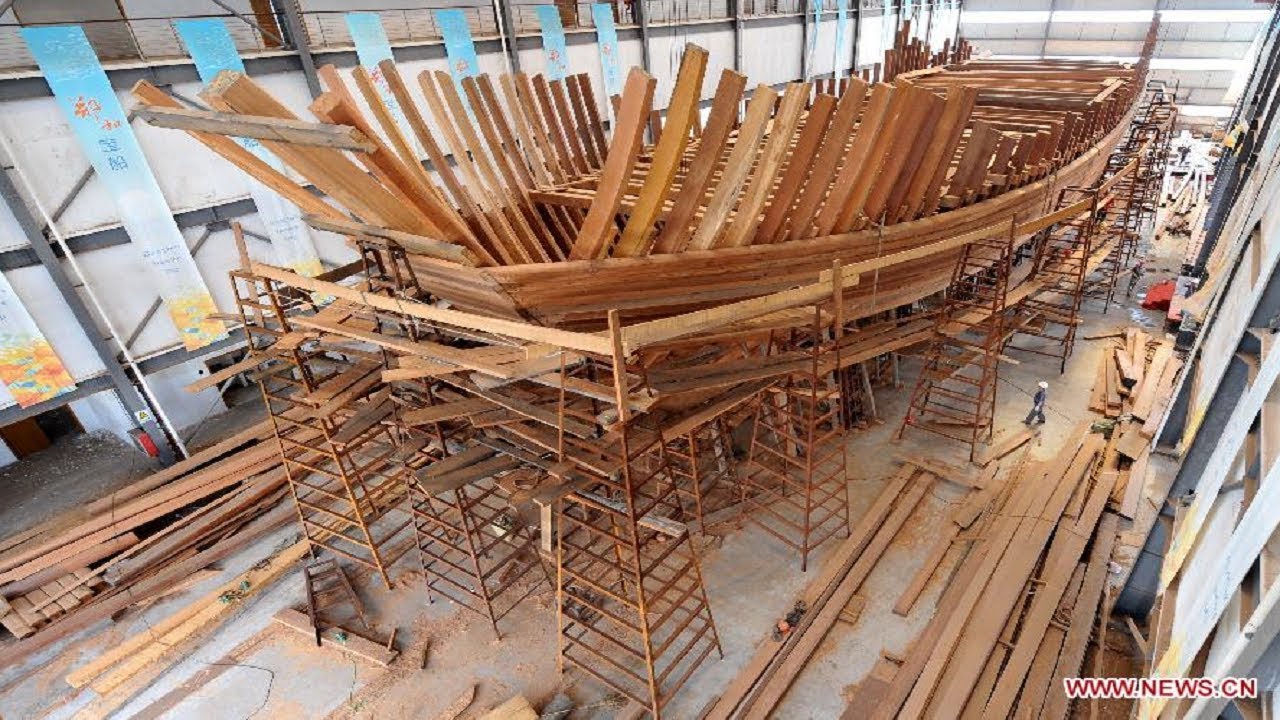
Beyond the Plans: Unveiling Hidden Secrets of Wooden Boat Stability and Performance
Wooden boat building is a timeless craft, blending artistry with engineering. While countless books detail traditional techniques, this review of "Wooden Boat Making: Tips for Stability and Performance" (assuming the existence of such a book for review purposes) delves into less-explored aspects, focusing on the subtle nuances that separate a good boat from a truly exceptional one. We'll approach this not as a simple summary, but through a series of insightful questions and answers, drawing on modern materials science and hydrodynamic principles often overlooked in classic boatbuilding literature.
The Unsung Heroes: Material Selection Beyond the Species
Choosing the right wood is paramount, but what about the often-ignored details? We're not just talking about oak versus cedar here.
Q: How can the internal structure of the wood affect boat performance beyond simple strength?
A: The answer lies in understanding wood's cellular structure. Recent research in materials science (Reference needed: A relevant scientific paper on wood microstructure and its impact on bending strength and flexural rigidity would be cited here) indicates that the alignment and density of wood cells significantly impact flexural rigidity and dampening of vibrations. A boat built with lumber exhibiting tightly aligned, high-density cells might offer superior responsiveness and a smoother ride compared to one with more randomly arranged cells. This is something rarely considered during wood selection. Instead of simply choosing "strong" wood, we need to think about the kind of strength needed â€" stiffness versus resilience â€" based on the boat's design and intended use.
Q: How can moisture content impact long-term stability beyond simple warping?
A: Traditional wisdom emphasizes stable moisture content. But consider this: controlled, gradual changes in moisture content throughout the boat's life can actually improve long-term performance. By carefully managing the wood's equilibrium with its environment (Reference needed: A study on the effects of controlled moisture cycling on wood stability would be cited here), we might be able to mitigate some stress cracks and improve the lifespan of the boat by reducing the impact of sudden environmental changes.
Beyond Traditional Shaping: Optimizing Hydrodynamics
The shape of a hull dictates its performance. But how can we optimize beyond classic designs?
Q: Can computational fluid dynamics (CFD) enhance traditional boat design?
A: Absolutely. While traditionally a realm of large-scale shipbuilding, CFD modeling is becoming accessible to hobbyists. Using free or affordable software (Reference needed: Examples of open-source CFD software packages relevant to boat design), builders can simulate water flow around their designs, optimizing features like the keel, stem, and stern for minimal drag and maximum efficiency. This allows for data-driven design refinements that go beyond intuition alone. For example, small modifications to the transom shape, guided by CFD results, can significantly improve planing performance.
Q: How can we incorporate modern materials to enhance traditional designs?
A: The integration of modern composite materials (e.g., carbon fiber) in strategic areas of a wooden hull, such as reinforcing joints or adding stiffness to the keel, offers the possibility of increased strength and reduced weight without sacrificing the beauty of the wood. This represents a blend of traditional craftsmanship with cutting-edge technology, opening a new frontier in wooden boat building.
Real-World Lessons: Stories from the Build
Let's consider a hypothetical scenario:
Imagine a boat builder who, after years of experience, noticed a recurring pattern in his designs. His smaller boats, using a particular type of locally sourced cedar, consistently exhibited superior responsiveness in choppy waters. Further investigation (through perhaps measuring the wood's density and cellular structure) might reveal a previously unknown connection between the specific wood properties and the boat’s inherent stability, leading to a unique and valuable design insight. This kind of empirical knowledge, gained through careful observation and data collection, represents an extremely valuable resource for further development in the field.
In conclusion, "Wooden Boat Making: Tips for Stability and Performance" (again, assuming this book's existence) would truly stand out if it explored these often-overlooked areas. By combining traditional craftsmanship with modern scientific understanding and a willingness to experiment, we can unlock new levels of performance and durability in wooden boat building. It’s not just about replicating the past; it's about intelligently innovating upon it.
0 comments:
Post a Comment